 Mon - Fri: 8:00 AM - 8:00 PM
 1553 State Route 27 Suite 3700 Somerset NJ 08873

The senior care industry uses home care and home health care almost interchangeably. Even some agencies blur the lines, and when you’re already stretched thin between your own family, your job, and making the right home care decision for your loved one, the last thing you’d want to be stressed about is the difference between home care and home health care.
Here’s the complication that comes from not knowing the difference: choosing the wrong type of care or overpaying for services your parent doesn’t need, or worse, underpaying and leaving critical health needs unaddressed.
The good news is that once you clearly understand the difference between home care and home health care, making the right decision gets much simpler.
The key difference is that home care involves providing support and daily assistance to seniors aging in place; like bathing, dressing, cooking, medications, lighthouse keeping, laundry, and it’s handled by in-home caregivers who might be licensed or not, while home health care includes services that are prescribed by a physician. It requires the expertise of a licensed medical professional, and it involves skilled nursing care services, like wound care and medication administration.
Think of it this way:
- Home care helps with daily life (non-medical).
- Home health care is medical care at home (ordered by a doctor).
Both happen in your parent’s home, but they serve very different purposes.
What Is Home Health Care?
This type of care (often called skilled home health care) involves providing skilled medical services to seniors at home, and is ordered by a physician, mostly after a hospitalization, surgery, or new diagnosis. For example, if your dad just had hip replacement surgery and needs a nurse to monitor his wound, or a physical therapist to help him walk again, that’s home health care.
It’s usually provided by a licensed home health agency and is covered by Medicare, Medicaid, or private insurance when criteria are met. The Centers for Medicare & Medicaid Services (CMS) provides detailed information about home health care eligibility requirements and covered services.
Common home health care services:
- Skilled nursing (wound care, injections, IV therapy)
- Physical, occupational, or speech therapy
- Medical monitoring and health assessments
- Medication management and administration
- Post-surgical recovery support
Home health care is typically short-term, but it can become long-term when seniors need medical assistance to manage a chronic condition. The goal is to help seniors recover from illness, injury, or surgery.
What Is Home Care?
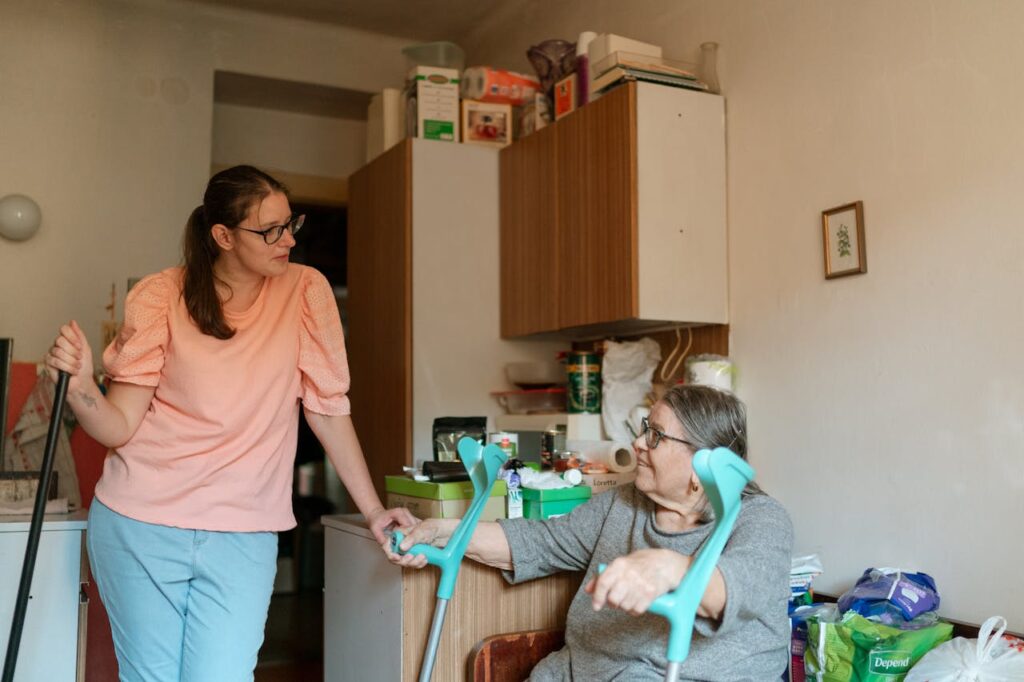
Home care, sometimes called non-medical home care or personal care assistance, is help with the daily life activities that become harder as your parent ages.
Trained caregivers and home care aides provide this service; they are not professional nurses or therapists, but are compassionate, skilled professionals focused on keeping your parent safe, comfortable, and independent at home. They can provide a few hours a week or 24/7 live-in support, depending on your situation.
Common Home Care Services Include:
- Help with bathing, dressing, grooming, and toileting
- Light housekeeping and laundry
- Meal planning and cooking
- Medication reminders (but not managing complex meds)
- Transportation to appointments or errands
- Companionship (conversation, games, walks, supervision)
- Fall prevention and home safety monitoring
Falls are one of the leading reasons families seek home care services. In-home caregivers can help reduce fall risk by assisting with mobility, removing hazards, and providing supervision. Learn more in our comprehensive guide: How to Prevent Senior Falls at Home: A Complete Guide.
Typically, Medicare does not cover non-medical home care, but families usually pay privately, through long-term care insurance, or through Medicaid waiver programs, depending on the state. Check out this Medicare.gov resource to help you verify what’s covered.
The goal of home care is to assist seniors with their daily activities and not necessarily medical help.
Home Care vs. Home Health Care: A Comparison
| Home Care | Home Health Care | |
|---|---|---|
| Type of care | Non-medical, personal | Medical, clinical |
| Provided by | Trained caregivers/aides | Licensed nurses and therapists |
| Doctor’s order needed? | No | Yes |
| Covered by Medicare? | Generally no | Yes, when medically necessary |
| Duration | Ongoing, long-term | Short-term, goal-based |
| Focus | Daily living and quality of life | Recovery, treatment, and monitoring |
Home Care vs. Home Health Care: The Honest Difference No one Explains Clearly.
Who Delivers Each Type of Care?
Licensed professionals such as nurses, therapists, medical social workers, etc., provide home health care services. The doctor designs a care plan that guides the service they provide. Whether your parent is just recovering from an illness or managing a medical condition, the professionals follow the care plan and document their progress.
Home care aides provide personal care assistance, supporting seniors and helping them carry out their daily activities. They are usually trained to provide compassionate care to seniors, and they can operate with or without a license, depending on the state. What makes in-home caregivers valuable is that their consistent presence provides emotional support and fosters self-independence in seniors.
How Long Does Each Care Take?
Home health care is for short period of time, but the doctor in charge certifies how long you need home health care, and if you continue to meet the eligibility requirements for insurance.
Home care is typically long-term and is provided by professional caregivers who help seniors with daily living activities. The length of home care service can take as long as you want, depending on your needs and budget.
What Cost Looks Like
Home care services provide in-home support with daily living tasks (bathing, dressing, cooking, housekeeping, companionship). So the cost differs with the type of services requested and the duration involved. This is unskilled care, and it’s mostly paid privately by the patient, but in some cases, long-term insurances and Medicaid can cover the expenses in some states. The median hourly rate costs about $33, while the rate goes higher in areas where the cost of living is high.
Home health care services are more expensive, with registered nurse visits costing about $80-90 per hour. Home Health care services are mostly covered by Medicaid, Medicare, or private insurance if eligibility requirements are met.
Eligibility Requirements for Each Type of Care
A senior isn’t required to meet any criteria to be eligible for home care, since payment is usually out of pocket. A senior is usually the best fit for home care if they need help with daily routines, are starting to forget things, or worry about falls.
Home healthcare service is given following a doctor’s instructions, and eligibility requirements have to be met before a senior gets this service. If a senior has a new diagnosis, for example, heart failure that needs monitoring, or needs wound care, IV medication, or physical therapy, then they need home health care.
Next Step: Choosing A Care
So, which one does my parent need now? This is the question we hear most adult children ask. And honestly, the answer depends entirely on where your parent is right now, not where they might be in six months. Making the best choice for your loved one requires you to understand the type of care they need. Consider their specific needs: help with bathing, cooking, laundry, medication reminders, physical therapy after surgery, or monitoring of chronic medical conditions.
Many home care agencies provide both home care and home health care services, so it’s best to review as many agencies as you can. Reviewing multiple agencies can be overwhelming. To make the best decision, check out our guide.
Conclusion
At Tender Hands Homecare, we’re here to help you take the next step. We offer both home care and home health care services, so as your parent’s needs change, you won’t need to start over with a new provider. Our team will help you:
- Assess your parents’ current and future needs
- Understand which services are right for their situation
- Navigate insurance coverage and payment options
- Create a personalized care plan that fits your budget
Schedule your free consultation today or reach us via our social media channels. Let’s work together to give your parent the care they need and give you the peace of mind you deserve.
Your parents’ safety, comfort, and independence matter, and so does your peace of mind. Let’s make both possible.