 Mon - Fri: 8:00 AM - 8:00 PM
 1553 State Route 27 Suite 3700 Somerset NJ 08873
The phone call every adult child dreads came at 2 AM. “Mom fell in the bathroom.” We’re heading to the ER. If you have an aging parent, this scenario probably keeps you up at night.
Here’s what should concern you even more: one in four adults over 65 falls each year. And that’s not even a small risk; it means if you know four seniors, one of them will likely fall this year.
But here’s the truth that hospitals and statistics don’t always tell you: most senior falls are completely preventable. After years of caring for elderly clients, we’ve found that senior falls are quite preventable, and we’ve seen what actually works to keep seniors safe at home.
If you’re an adult child, this post is about straightforward steps that you can follow to help your loved ones prevent falls. Following these practical steps would allow them to live safely in the house they love, and give you peace of mind so you can finally sleep.

Why Senior Falls Are More Dangerous Than You Think
Let’s address the question that bothers every concerned adult child. Falls aren’t just stumbles or missteps for seniors; they’re risky incidents that can turn into life-threatening situations.
Look at the numbers for a moment, because understanding the stakes helps motivate action.
- Every 11 seconds, an aged adult is treated in an emergency room for a fall.
- Every 20 minutes, an older adult dies from a fall-related injury.
According to the Centers for Disease Control and Prevention (CDC), falls are the leading cause of injury-related deaths among older adults.
In 2020 alone, healthcare spending for non-fatal senior falls reached $80 billion, but it’s not just about statistics. Falls can devastate lives in ways that go beyond broken bones and injuries:
- Physical consequences: Hip fractures, traumatic brain injuries, and reduced mobility that can permanently change your parent’s quality of life.
- Psychological impact: After falling once, many seniors develop a crippling fear of falling again. This fear makes them less active, which actually increases their fall risk, creating a dangerous cycle.
- Loss of independence: A serious fall often marks the turning point between living independently and needing full-time care.
The upside? You can stop this from happening again.
What Are The 6 Common Causes of Falls in Seniors?
Before we’re able to provide solutions, you need to understand why seniors fall in the first place. It’s rarely just one thing; it’s usually a combination of factors. Through our experience with elderly fall prevention at home, we’ve identified these common causes:
1. Environmental Hazards
If you walk through your parents’ home right now, you’ll probably spot a dozen fall hazards like loose rugs, poor lighting, cluttered walkways, and slippery floors. These hazards account for a surprising number of falls.
2. Medication Side Effects
Your parents’ bodies change with age in ways that increase fall risk. Many medications cause dizziness, drowsiness, or low blood pressure, especially when they’re taken together. If your parent takes four or more prescriptions, their fall risk increases.
3. Muscle Weakness
As we age, we begin to lose muscle mass, which affects balance and stability. Without regular movement, this accelerates quickly.
4. Vision Problems
Outdated prescriptions, cataracts, and glaucoma make it harder for seniors to judge distances and see obstacles.
5. Chronic Health Conditions
Diabetes, arthritis, Parkinson’s disease, and heart conditions all increase senior fall risk factors through various mechanisms.
6. Footwear Choices
Those cozy slippers your mom loves? They might be her biggest hazard. Loose, worn, or backless shoes are fall accidents waiting to happen.
For more detailed information about age-related changes that increase fall risk, the National Institute on Aging provides comprehensive resources on balance problems and mobility issues in older adults.
How Do You Prevent Senior Falls at Home?
Let’s get practical, walk through your parents’ home with this guide, and make changes as you go. Here’s exactly what to change in each room of your parents’ home to dramatically reduce fall risk.
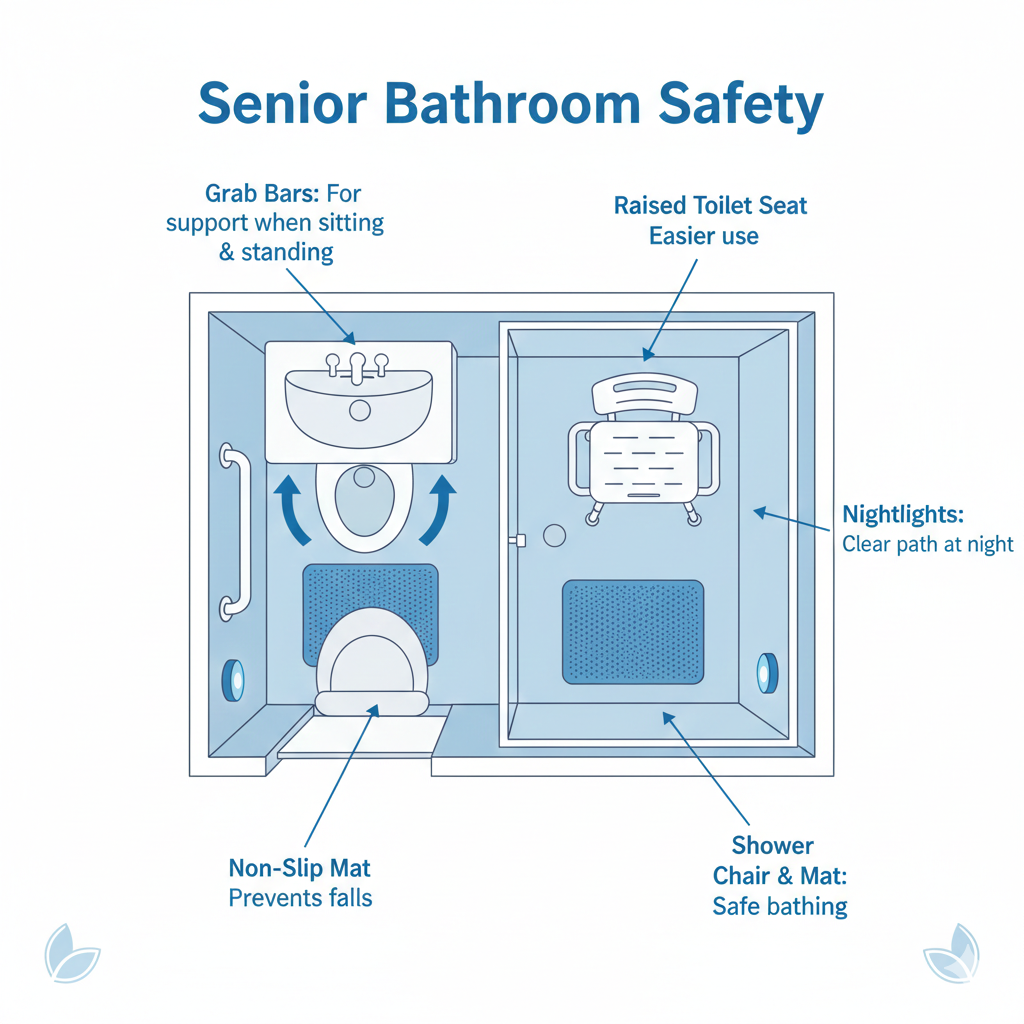
This is usually the riskiest area in the home. Wet and slippery surfaces combined with getting in and out of tubs make bathrooms incredibly dangerous for seniors.
Actionable tips:
- Install grab bars, not towel bars; they won’t hold weight. Place them inside, outside the shower, and next to the toilet, and make sure you properly anchor it to the wall studs.
- Add non-slip mats, use them inside the shower and on the bathroom floor. Replace them when they start to wear out.
- Raise the toilet seat with armrests to make sitting down and standing up much safer and easier if your parent struggles to sit or stand comfortably.
- Make sure you install a bright overhead light and add a nightlight for those middle-of-the-night bathroom trips.
- You should consider a walk-in tub or shower if your parent has significant mobility issues. This investment can be life-changing.
Bedroom
Falls often happen when seniors get up at night to use the bathroom, are disoriented from sleep, and try to move around in the dark.
Actionable tips:
- Place a lamp within easy reach; they should be able to turn on a light without getting out of bed. You might want to consider motion-activated nightlights that automatically illuminate the path to the bathroom.
- Always keep the floor clear with no shoes, books, or clutter between the bed and bathroom.
- Adjust bed height: The mattress should allow your parent to sit with their feet flat on the floor. When it’s too high or low it makes getting in and out difficult.
- Keep a phone or medical alert device on the nightstand.
- Either remove area rugs entirely or secure them with non-slip pads underneath.
Kitchen Safety
The kitchen presents unique challenges. Reaching for items on high shelves, navigating around islands and counters, and dealing with spills create opportunities for balance loss.
Actionable tips:
- Reorganize the storage, move frequently used items to lower shelves between waist and shoulder height. Your parent shouldn’t need to stand on a step stool or chair to reach everyday dishes.
- That throw rug in front of the sink? It’s a tripping hazard. Just get rid of it.
- Clean up spills immediately, and keep paper towels handy just to make wiping up spills a habit.
- Ensure proper lighting under the cabinet to eliminate shadows and improve visibility while preparing food.
- Keep pathways clear. Don’t let grocery bags, pet bowls, or other items create obstacles on the floor.
Living room and Hallways
These are high-traffic areas where your parent spends most of their time, so these areas need clear pathways and good visibility.
Actionable tips
- Remove all rugs from walking paths because throw rugs are such common culprits in falls. If your parent insists on keeping them, use heavy-duty non-slip rug pads.
- Arrange the furniture for clear pathways and make sure there’s a straight, unobstructed path through each room. Avoid furniture with sharp corners along main walkways.
- Improve lighting with accessible light switches at the entrances of every room and hallway.
- Secure electrical cords by taping them along baseboards. Never let cords stretch across walkways.
- Install handrails in long hallways if your parent uses a walking stick or cane. Handrails provide extra stability.
What to Do If Your Parent Falls
Despite best prevention efforts, falls can still happen. So it’s best to know what action to take to prevent panic and ensure proper care for your loved ones.
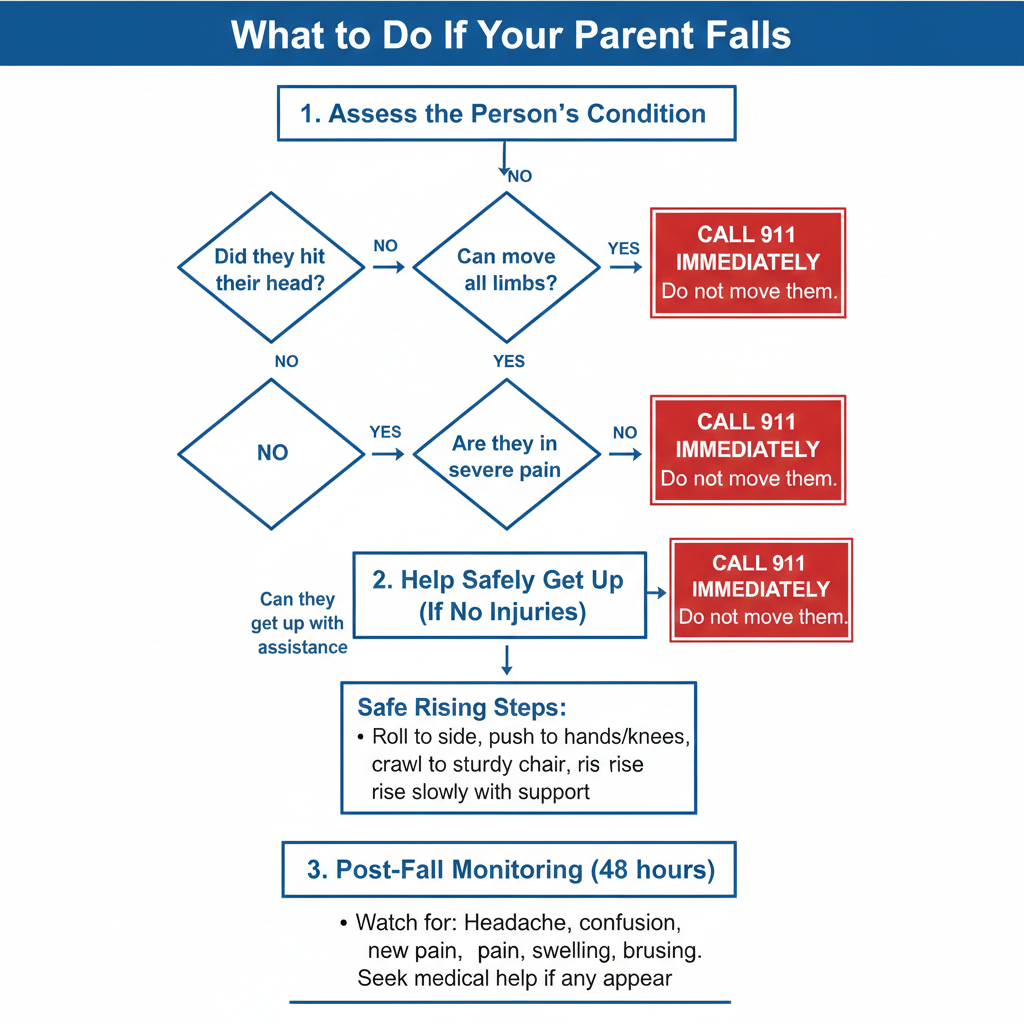
If you’re present during the fall
It’s best to stay calm and composed; your imminent reaction sets how they’ll also respond. Don’t rush to pick them up; ask if they’re hurt and where. If it’s serious, contact emergency services (911) immediately. If they seem okay, guide them to roll onto their side, get onto all fours, and use a sturdy chair to push up.
Stay close for support, and then monitor for 24-48 hours for delayed symptoms like confusion, dizziness, or worsening pain. Always call their doctor, even if the fall seems minor; some injuries don’t show symptoms immediately, and every fall should be medically evaluated.
If you received a call about a fall: (H4)
Ask specific questions about their mobility: Where does it hurt? Did they hit their head? Are they still on the ground? If there’s any doubt about injury severity, call 911 immediately.
Document what happened, write down when the fall occurred, what your parent was doing, what they tripped on, and any injuries. This information helps doctors identify patterns and adjust their treatment plans.
Don’t Ignore the First Fall. It Might Be Time to Consider Professional Support
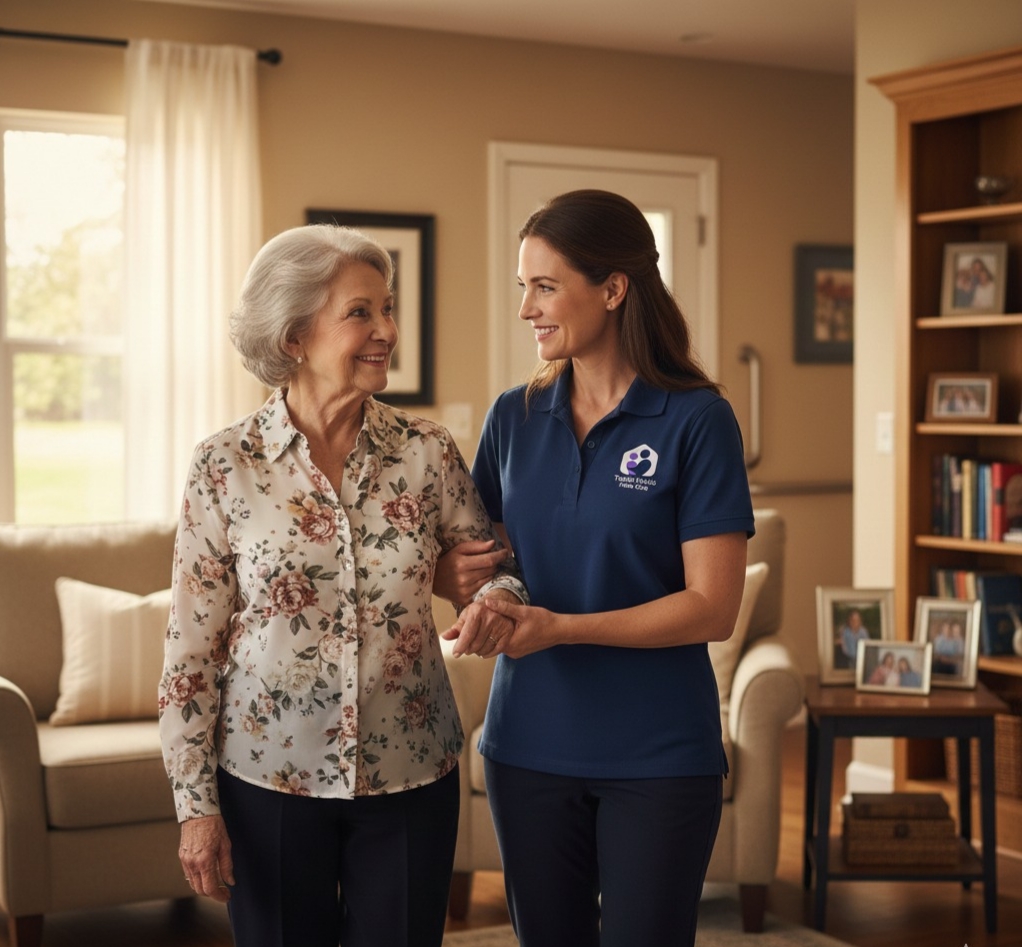
Here’s something critical that many families miss: falling once doubles the risk of falling again.
After a fall, many seniors don’t tell their doctor because they’re afraid of losing their independence. They worry you’ll insist on moving them to assisted living. But silence is dangerous.
The first fall is your wake-up call. It’s your chance to conduct a thorough safety assessment of their home, review their medications for side effects, address their vision or hearing problems, start balance exercises, and consider bringing in professional home care support.
There is no shame in recognizing when your parent needs more help than weekend visits can provide. Consider professional home care if:
- Falls are becoming more frequent
- Your parent lives alone, and you can’t check in daily
- They’ve developed a fear of moving around their home
- You’re experiencing caregiver burnout
Professional caregivers can provide supervision, assist with mobility, ensure medication compliance, and give you something priceless: peace of mind knowing someone is there. If you’re considering professional home care but aren’t sure how to choose the right agency, read our comprehensive guide: Senior Living at Home: How to Choose the Right Home Care Agency.
This guide walks you through 7 essential questions to ask when evaluating home care providers.
Take the Next Step Toward Your Parents’ Safety
You don’t have to figure this out alone. At Tender Hands Home Care, we’ve helped hundreds of families create safer environments for their aging parents and provided skilled, compassionate caregivers when extra support is needed.
Schedule a free home safety consultation today. We’ll walk through your parents’ home, identify fall risks, and create a personalized prevention plan, no obligation, no pressure.
Because you deserve to sleep peacefully knowing your parent is safe.